Ask ten guests what they remember most about a week in Puerto Vallarta and a surprising number will describe a morning on the water. Fishing tours in Puerto Vallarta are one of the few activities here that work for a mixed group — the serious angler, the teenager who has never held a rod, and the person who mostly wants coffee and a sunrise — and they are far easier to arrange from a rental than most visitors assume.
This guide is the practical version: how to choose the right trip length, which marina to leave from, what to ask before you pay, and how to handle the part nobody plans for, which is what to do with twenty pounds of fish at two in the afternoon.
Why the fishing here is unusually accessible
Banderas Bay is one of the deepest bays in North America, and the bottom drops off sharply not far from shore. That underwater canyon brings blue-water species remarkably close to the marinas, which is why a four to six hour trip out of Puerto Vallarta is real fishing time rather than mostly transit.
For someone on a one-week stay, that changes the calculation entirely. You do not have to give up a whole day. Leave before sunrise, be back at the rental by early afternoon, and the rest of the day is still yours.
Pick the trip before you pick the boat
The most common way a fishing morning goes wrong is booking the wrong kind of trip. There are three:
Inshore, roughly four hours
Along the coastline and rock structure, in calmer water, close to shore. This is the right choice for families with kids, first-timers, and anyone who is not sure about seasickness. Target species include roosterfish, jack crevalle, sierra, bonito and snapper — fast, hard-fighting fish that keep everyone busy.
Offshore half day, six to eight hours
Far enough out to reach blue water and a genuine shot at dorado, tuna or a billfish, without surrendering the entire day. For most visiting groups this is the sweet spot.
Full day offshore, ten to twelve hours
Long runs to the offshore banks with big-game tackle and the best odds at a trophy fish. Only book this if every person aboard actively wants to fish for that long. It is a poor choice for a mixed family group.
Boat type follows from the trip. A panga is nimble and economical for inshore work; a larger cruiser gives you shade, a bathroom, a smoother ride in swell and the range to go offshore. If anyone in your party will want either of the first two things, do not book a panga for a long day.
Which marina, and how long is the drive?
- Marina Vallarta / Los Peines — the main sportfishing hub with the biggest fleet. Convenient if you are staying in the Marina, Hotel Zone, Fluvial or Versalles.
- Marina Nuevo Vallarta — sheltered and calm, the easy option if your rental is in Nuevo Vallarta or Flamingos.
- Marina Riviera Nayarit, La Cruz de Huanacaxtle — the shortest run to the offshore structure at Corbeteña and El Banco; ideal if you are north of the airport.
- Boca de Tomatlán — pangas rather than a marina, serving the south shore and the inshore rock structure toward Yelapa.
Two practical notes. First, confirm the exact meeting point in writing — "Puerto Vallarta" covers a lot of coastline at 5:30 in the morning. Second, budget extra time if you are crossing the airport stretch in high season; traffic there is unpredictable even at dawn.
Seasons, in one paragraph
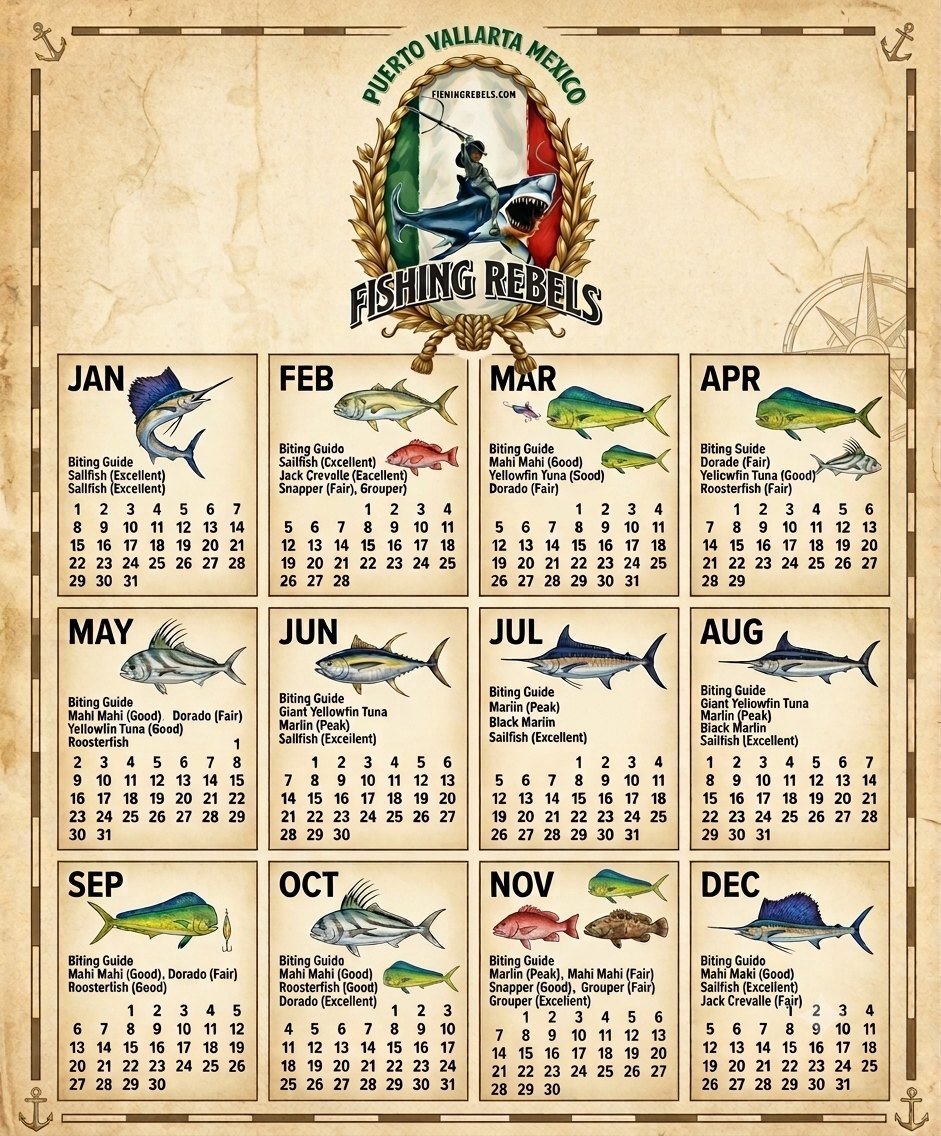
There is no bad month. From November through April the weather is dry and comfortable, seas are typically calm and the bay fills with sailfish, striped marlin, dorado and roosterfish; this is also when the best boats book out earliest. From May through October the water warms and the big offshore game arrives — blue and black marlin, large yellowfin tuna, plenty of dorado — with afternoon rain common but mornings often glassy. The shoulder weeks at either turn frequently produce the most varied fishing with the thinnest crowds.
What to ask before you pay a deposit
- What is included? Licences, bait, tackle, ice, drinking water, food and any fuel surcharge. "All inclusive" means different things to different boats.
- Are Mexican fishing licences handled for everyone on board? They are legally required. Established operators take care of it; confirm rather than assume.
- Private or shared? Sharing a boat with strangers is a completely different trip from a private charter.
- How many people can the boat comfortably take? "Capacity" and "comfortable" are not the same number.
- What happens if the weather turns? Get the reschedule or refund policy before you pay.
- Do they clean and bag the catch? Important if you are staying somewhere with a kitchen.
The operator we point guests toward is Fishing Rebels, who run both inshore pangas and larger offshore boats and are unusually straightforward about what a given trip will and will not produce — including telling you when conditions are not worth the money. If you want to compare options before your trip, you can book a fishing tour in Puerto Vallarta directly and tell them how many people are in your group; that single detail decides most of the rest.
The morning itself: a short checklist
- Book two or three days ahead in high season, and further out for a specific boat or a holiday week.
- Expect a 6 to 8 a.m. departure. Both the fish and the sea state are better early.
- Pack: reef-safe sunscreen, a hat that survives wind, polarized sunglasses, a light long-sleeve layer, closed shoes with grip and a dry bag for your phone.
- Manage seasickness in advance. Medication works best taken the night before and again in the morning; if in doubt, book inshore.
- Bring cash for the crew. Tipping the deckhands is customary and it matters to them.
- Go easy the night before. The most common cause of a miserable morning offshore has nothing to do with the ocean.
What to do with the catch
This is the part that most guides skip. Billfish are released; edible species like dorado, tuna, snapper and sierra are usually filleted for you at the dock. That leaves you standing on a pier at 2 p.m. with a bag of very fresh fish and a decision to make.
The best option, if you are in a rental with a kitchen, is simply to cook it. Fresh dorado needs nothing more than lime, salt and a hot pan. Failing that, several restaurants around the marinas will cook your catch for you for a modest fee — ask your captain which ones, since they all have a favourite. And if you are flying home soon, ask whether the crew can vacuum-seal and freeze it.
If you are still deciding where to base yourself for a trip like this, our guides to the neighborhoods and rental areas of Banderas Bay are a good starting point — proximity to a marina matters more than most visitors expect when the alarm goes off at five.
Frequently asked questions
How much do fishing tours in Puerto Vallarta cost?
Prices vary widely by boat size, trip length and whether the charter is private or shared, so ask each operator for a written quote that spells out what is included. Comparing headline prices without checking licences, bait, tackle, food and fuel surcharges is how people end up surprised at the dock.
Do I need experience to go?
No. Most people aboard these boats have never fished before. A good crew rigs everything, hands you the rod when a fish is on and coaches you through the fight. Tell the operator you are beginners when you book so they plan accordingly.
Is a half-day trip enough?
For most visitors, yes. Because deep water sits so close to shore in Banderas Bay, a half day is genuine fishing time. Full-day trips make sense when the whole group specifically wants to chase marlin or tuna at the offshore banks.
What is the best time of year?
November to April for calm seas, sailfish and striped marlin; May to October for blue and black marlin, big yellowfin tuna and dorado. Both are good; the difference is weather and which species is most likely.
Can children come along?
Yes, and inshore trips are ideal for them: calmer water, shorter hours and steady action. Bring extra water, sun protection and snacks, and tell the captain there are kids aboard when you book.
What happens if the trip is cancelled for weather?
Reputable operators cancel when conditions are unsafe and will reschedule or refund. Ask about the policy before paying a deposit, and if fishing is the highlight of your stay, leave a spare morning in the itinerary as a backup.